


Grow Tent Humidity: The Right RH for Every Stage (and How to Control It)
Humidity is the setting most growers ignore until something goes wrong — and by then it's usually grey mould in week seven or clones wilting on day two. The fix is simple once you know the numbers: aim for roughly 70% for clones, 60% in veg, 50% in early flower and 40% for the last few weeks. Here's why the target drops as the plant grows, what VPD is doing underneath it all, and exactly how to raise or lower your tent's humidity to hit those figures.
The humidity target drops as the plant grows
A cutting has no roots, so it can only drink through its leaves — it needs damp air around it or it dries out before it can strike. A mature flowering plant is the opposite: it has a big root system doing the drinking, and all that moist air now just invites mould into dense flowers. So the rule of the whole grow is one line: start humid, finish dry.
Why late flower matters most
Botrytis — grey mould — only needs damp, still air inside a dense flower to take hold, and by the time you see it the flower is already lost. Dropping to 40% RH for the final two to three weeks is the single most effective thing you can do to prevent it. If you only control humidity at one point in the grow, make it the finish.
What VPD actually is (and why the pros use it)
Humidity on its own is only half the story, because warm air holds far more moisture than cool air. 60% at 20°C and 60% at 28°C are two completely different environments for a plant. VPD — vapour pressure deficit — rolls temperature and humidity into a single number that tells you how hard the air is pulling water out of the leaf. It's measured in kilopascals (kPa).
Think of it as the plant's "thirst gauge." Low VPD (cool and humid) means the air is nearly full, the plant can barely transpire, growth slows and mould thrives. High VPD (hot and dry) means the air is pulling too hard, the plant closes its stomata to protect itself, and again growth stalls. The sweet spot sits in the middle — roughly 0.8–1.1 kPa in veg and 1.0–1.5 kPa in flower — where the plant transpires freely, drinks steadily and feeds hard.
You don't have to do the maths
VPD depends on leaf temperature too (a leaf usually runs a couple of degrees below air temperature), so the full calculation is fiddly. The practical shortcut: hit the RH and temperature targets in the chart above and your VPD lands in range automatically. If you want to dial it in precisely, a VPD meter reads it straight off — no formula needed. The RH numbers are your everyday guide; VPD is the finer tuning underneath.
How to lower humidity (the usual problem)
Most growers fight high humidity, and it's worst exactly when it matters most: late flower, when big plants are transpiring litres of water into a full tent, and lights-off, when the air cools and its relative humidity shoots up. Work through these in order — the cheap fixes first:
1. Move more air out. Your extractor fan is the first lever — moist air leaves the tent and drier room air replaces it. If RH is creeping up, a fan that's slightly undersized or running too slow is often the cause; our fan & filter sizing guide shows how to check yours is up to the job. 2. Water in the morning and pour off any run-off sitting in trays — standing water evaporates straight back into the air. 3. Defoliate and space plants so air moves through the canopy instead of stagnating in it. 4. Then reach for a dehumidifier — the only tool that removes moisture on demand and holds a target regardless of what the plants are doing.
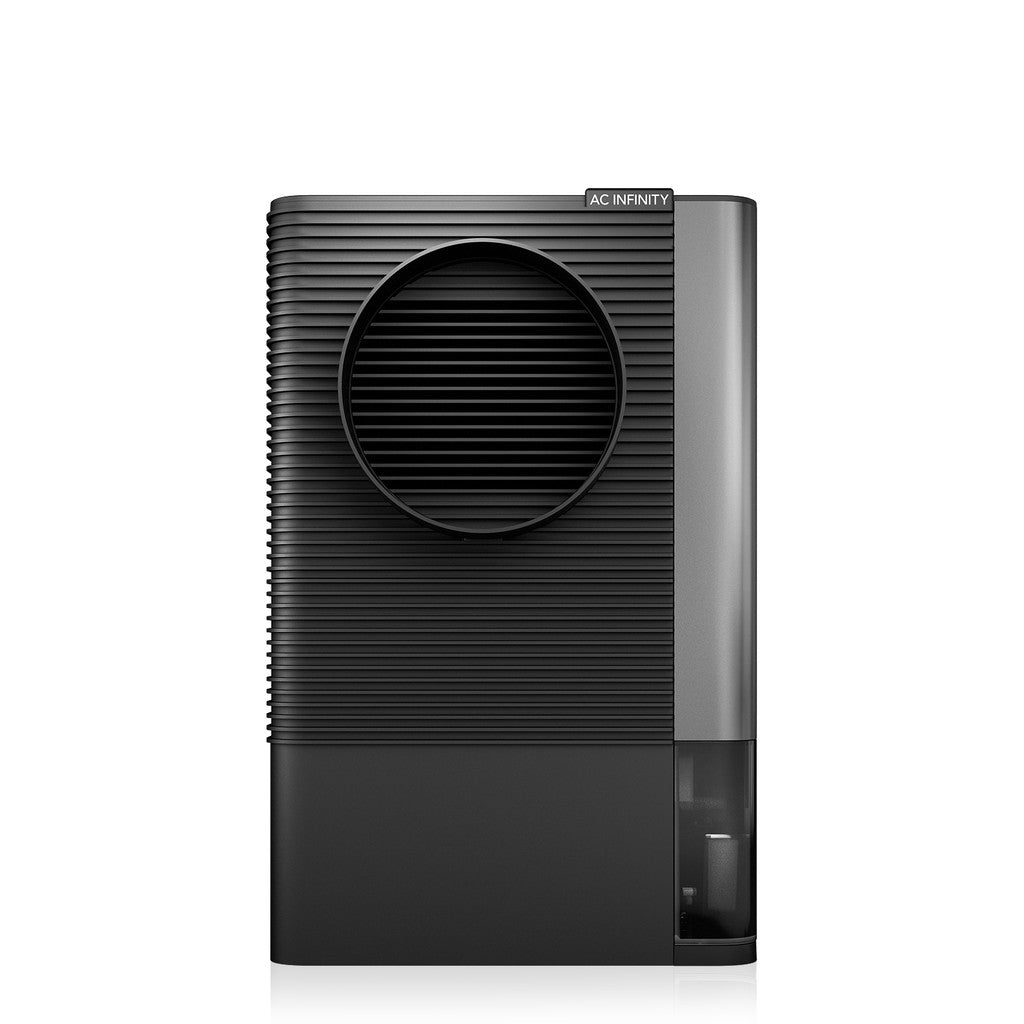
AC Infinity Hydrone Dehumidifier
from £146.99
Holds a set RH — ideal for a single tent
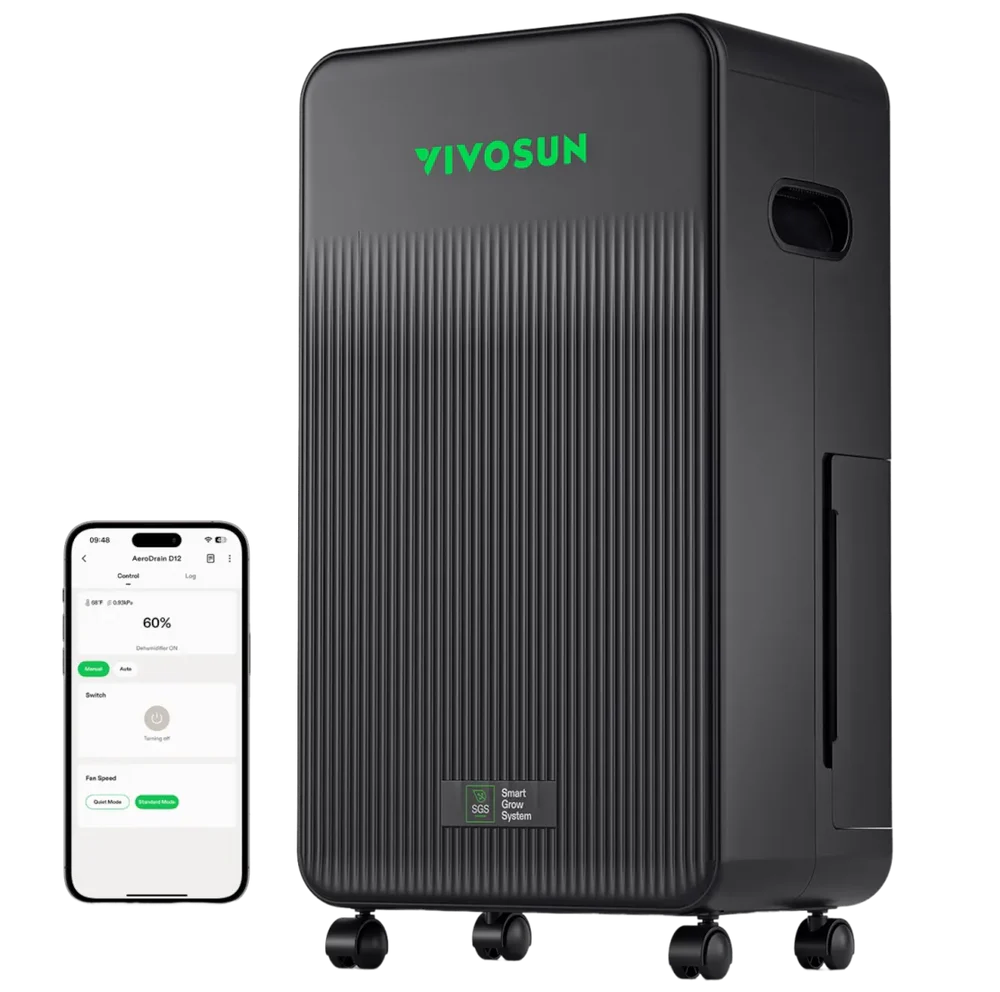
VIVOSUN AeroDrain D12
£318.49
App control & auto-drain for bigger rooms

Dry Bag Hanging Dehumidifier
£6.50
Cheap passive backup for the final weeks
The lights-off spike catches everyone
When the light switches off the air cools, and cooler air can't hold as much water — so the same moisture reads as much higher humidity. A tent sitting at a comfortable 55% in the day can jump past 70% overnight. If your grey mould always seems to start in the dark period, this is why: run the dehumidifier through lights-off, or keep the night temperature from crashing. In a summer heatwave the two problems stack up — our grow tent cooling guide tackles the heat side.
How to raise humidity (veg, clones & dry rooms)
The other direction matters just as much early on. Clones and seedlings need moist air to survive without roots, and a young veg plant in a dry winter room — or one under a powerful extractor pulling bone-dry air through — will transpire faster than it can drink, curling its leaves and stalling. The fixes mirror the ones above. Slow the extraction with a fan controller so you're not stripping moisture out as fast as you add it, keep clones under a propagator dome where the air stays saturated, and for everything else, add a humidifier — a fine ultrasonic mist is the reliable way to hold veg at 60% or clones at 70%.
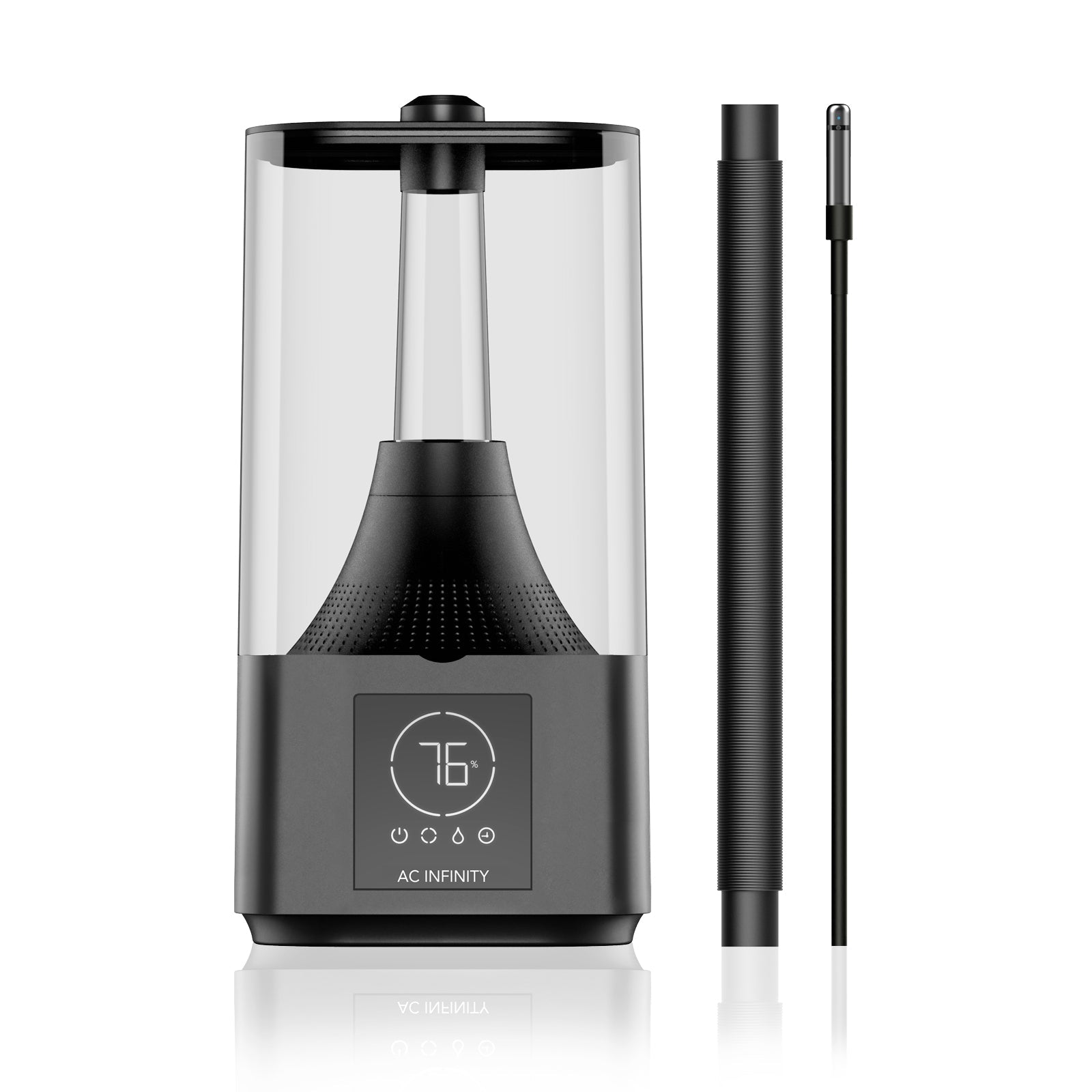
AC Infinity CloudForge Smart Humidifier
from £72.49
Targets an RH and holds it, app-controlled

Pure Factory Humidifier — 8L
£44.95
Big reservoir, simple and affordable

G.A.S SonicAir Humidifier 10L
£74.90
10L output for larger veg spaces
Measure it first — then let it run itself
You can't hit a target you can't see, and the cheap sensors built into some tents or plug timers drift badly. Put a proper thermo-hygrometer at canopy height, not on the floor or up by the light, because that's the air your plants actually live in. A basic meter tells you the RH; a VPD meter does the temperature-and-humidity maths for you and shows the single number the pros chase.

AC Infinity VPD Thermometer
£26.89
Reads VPD, temp & RH on one screen
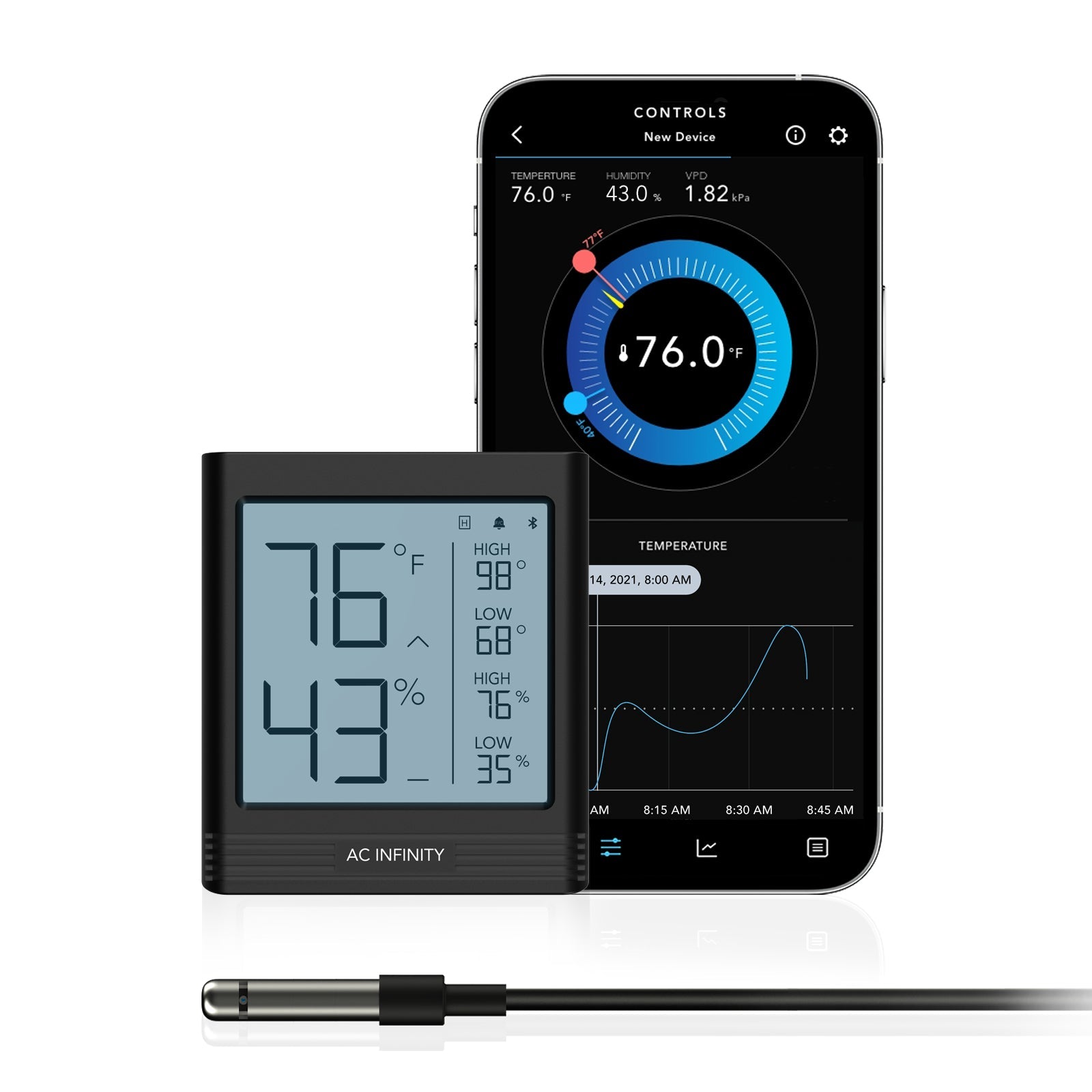
AC Infinity CloudCom Thermo-Hygrometer
from £19.49
Logs RH & temp to your phone

Grow Tools Temperature & Humidity Meter
£9.49
The budget way to stop guessing
Once you can see the number, the last upgrade is to stop watching it. An environment controller reads the humidity itself and switches your humidifier, dehumidifier and fans on and off to hold a target RH or VPD around the clock — including through that lights-off spike while you're asleep. It's the difference between chasing the tent all day and setting it once.
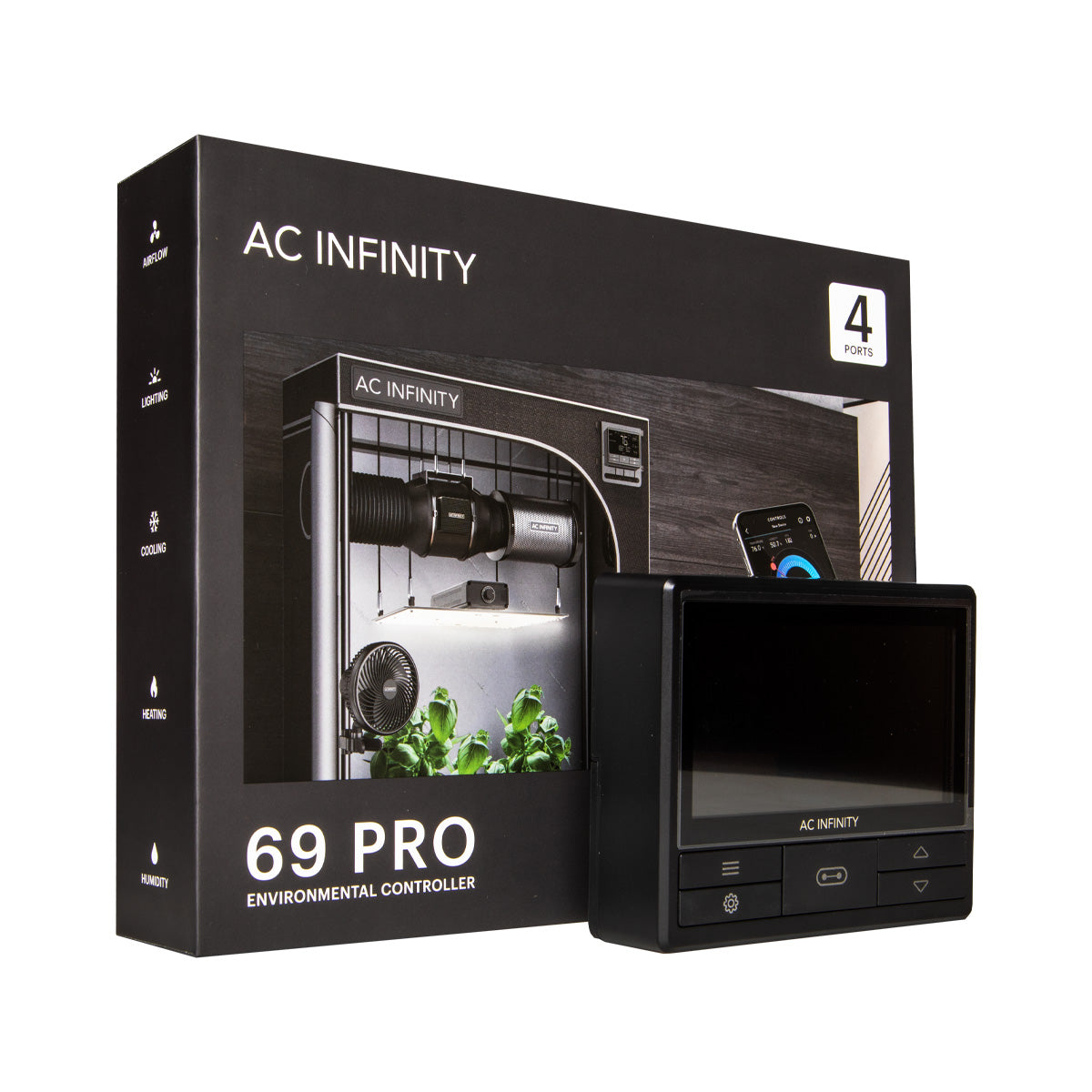
AC Infinity Controller 69 PRO
£90.49
Runs fans & kit to a set RH/VPD, 24/7
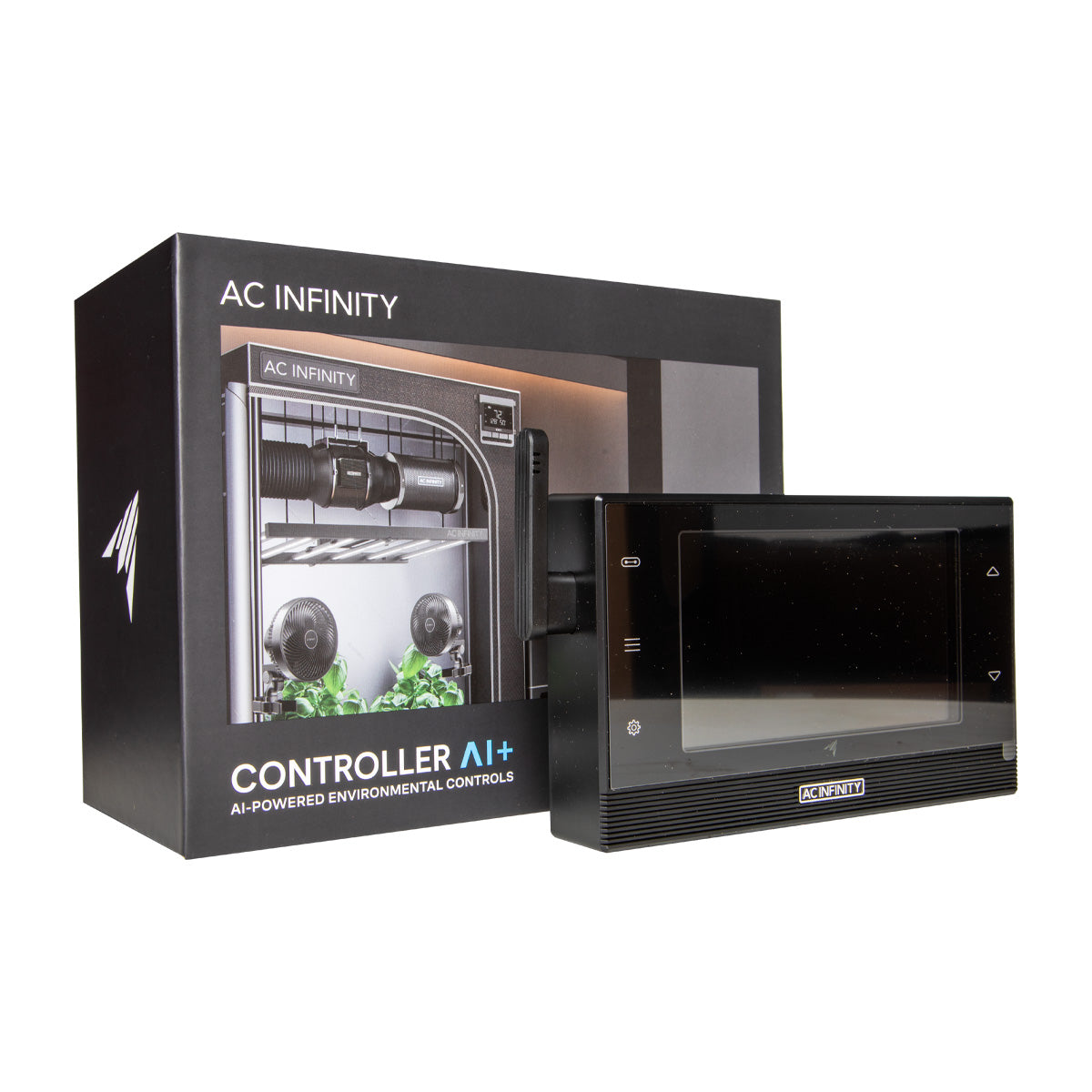
AC Infinity AI+ Environmental Controller
£156.99
Automates a whole tent from one hub
Quick answers
What humidity should a grow tent be?
It changes with the stage. Aim for roughly 70% for clones and seedlings, 60% in vegetative growth, 50% in early flower, and 40% for the final two to three weeks of flower. The target falls as the plant grows because young plants drink through their leaves and need moist air, while mature flowering plants have roots to do the drinking and dense flowers that rot in humid air. If you remember one thing: start humid, finish dry.
How do I lower the humidity in my grow tent?
Work cheapest-first: increase your extractor fan speed so more moist air leaves the tent, water in the morning and pour off standing run-off, and defoliate so air moves through the canopy. If that isn't enough — and in late flower it usually isn't — add a dehumidifier, which is the only tool that pulls moisture out on demand and holds a set RH. Watch the lights-off period especially, as humidity spikes when the air cools at night.
How do I raise humidity for clones and seedlings?
Keep cuttings under a propagator dome so the air around them stays near-saturated, and add a humidifier to hold the room at about 70%. If a strong extractor fan is drying the space out, slow it down with a fan controller so you're not stripping moisture as fast as you add it. Clones have no roots yet, so damp air is what keeps them alive until they strike.
What is VPD, and do I need to worry about it?
VPD (vapour pressure deficit) combines temperature and humidity into one number, measured in kPa, that shows how strongly the air is pulling water from the leaf. Good ranges are about 0.8–1.1 kPa in veg and 1.0–1.5 kPa in flower. You don't have to calculate it — if you hit the RH and temperature targets for each stage, your VPD lands in range on its own. A VPD meter is worth it if you want to fine-tune, but the RH numbers are all most growers need day to day.
Why does my humidity spike when the lights go off?
Because cooler air holds less moisture. When the light switches off the tent temperature drops, and the same amount of water vapour now reads as a much higher relative humidity — a tent at 55% in the day can climb past 70% overnight. It's the most common cause of grey mould that seems to appear from nowhere. Run a dehumidifier through the dark period, or stop the night temperature crashing, and the spike disappears.
Is high humidity really that bad in late flower?
Yes — it's the single biggest cause of a lost harvest at the finish line. Botrytis (grey mould) and powdery mildew both thrive in damp, still air, and dense flowers late in the cycle are the perfect place for them to start unseen. Holding 40% RH for the last two to three weeks, with good airflow through the canopy, is the most effective prevention there is. It costs a lot less than losing the crop in the final three weeks of flowering.
More grow guides
- What size extractor fan and carbon filter do you need?
- How to set up a grow tent, step by step
- Feeding in coco: nutrients, EC & pH made simple
- Spider mites: the 14-day rescue plan
- How to keep your grow tent cool in summer
- LED vs HPS: which is actually cheaper to run?
- Nutrient burn: how to spot it, fix it and stop it coming back
- How to take cuttings: the complete cloning guide
Questions? Call the shop on 020 3488 0419 — free expert advice, 6 days a week. Free Express Delivery over £60, arriving in 1-2 working days.