


LED vs HPS: Which Is Actually Cheaper to Run? (Oct–Dec 2026 Costs)
Your grow light is almost always the biggest line on your electricity bill — and at 26.32p per kWh, a 600 W HPS running 12/12 costs £2.08 a day. Swap it for a 480 W LED putting the same amount of light on the canopy and it's £1.52. That gap is £208 a year, which is roughly what the LED costs in the first place. Here's the full maths — what your light really costs, what switching actually pays back, and how to cut the bill if you're staying on HPS.
Every figure on this page is for 1 October to 31 December 2026, at the Ofgem price cap of 26.32p per kWh. The next cap is announced in late November.
The only formula you need
Electricity is billed per kilowatt-hour — one kilowatt (1,000 watts) running for one hour. So:
Watts ÷ 1,000 × hours per day × your unit rate = cost per day
A 600 W HPS kit actually pulls about 660 W at the wall once you count the ballast. So: 660 ÷ 1,000 = 0.66 kW. × 12 hours = 7.92 kWh a day. × 26.32p = £2.08 a day, or £62.54 a month. That is about 17p for every hour the light is on.
The rate above is the Ofgem price cap for 1 October to 31 December 2026: 26.32p per kWh for a standard variable tariff paid by Direct Debit, averaged across England, Scotland and Wales. The government has removed VAT from electricity bills from 1 October 2026 to 31 March 2027, so there is no VAT to add on top of that figure. The standing charge is 54.83p a day; you pay it whether the light is on or off, so it is left out of the sums below. Your own rate will differ — the cap varies by region, and fixed tariffs, Economy 7 and business supplies all price differently. Check a recent bill for your actual pence-per-kWh and drop it into the formula; every number on this page scales straight from it.
600 W HPS vs 480 W LED: the head-to-head
This is the comparison that matters, because a Maxibright Daylight 480W puts out 1,104 µmol/s of light, and a good 600 W dual-spectrum HPS kit puts out roughly 1,100 µmol/s. Same light on the canopy. One does it on 660 W, the other on 480 W.
The bit most growers miss: your "600 W" light isn't 600 W
HPS lamps are named after the bulb, not the system. Add the ballast's losses and a 600 W kit draws roughly 640–670 W from the socket — the meter charges you for all of it. LED panels are the other way round: a "480 W" LED is rated at what the whole fixture pulls, driver included. So when you compare the two on the box, HPS is already flattering itself by about 10%.
What your grow light actually costs to run
Find your light's real wall draw in the left column. 12 hours is a flowering day; 18 hours is veg. All at 26.32p per kWh:
| Light (wall draw) | 12 h/day | 18 h/day | 30 days at 12 h |
|---|---|---|---|
| 150 W LED | £0.47 | £0.71 | £14.21 |
| 200 W LED | £0.63 | £0.95 | £18.95 |
| 300 W LED | £0.95 | £1.42 | £28.43 |
| 480 W LED (1.2 × 1.2 m tent) | £1.52 | £2.27 | £45.48 |
| 600 W LED | £1.90 | £2.84 | £56.85 |
| 660 W — a "600 W" HPS kit | £2.08 | £3.13 | £62.54 |
| 720 W LED | £2.27 | £3.41 | £68.22 |
| 1,000 W LED | £3.16 | £4.74 | £94.75 |
| 1,100 W — a "1000 W" HPS kit | £3.47 | £5.21 | £104.23 |
Don't forget the rest of the tent. An extractor fan on a 1.2 m tent is typically 60–110 W running 24/7 — that's £0.38–£0.69 a day on its own, often more than you'd guess. Add a clip fan and you're looking at roughly another £15–25 a month for the environment side of the grow. Our fan & filter sizing guide covers picking one that isn't oversized for the job.
Should you switch? Here's the payback
A Maxibright Daylight 480W is £263.95. A 600 W HPS kit is about £49.95. So switching costs you roughly £214 extra — and saves you £0.57 a day at 12/12. That's payback in about 12 months of continuous 12/12 running, or a little sooner once you stop buying a bulb every year. After that the saving is just money you keep, every year, for a fixture rated at 50,000 hours.
The honest version
If you run one tent for one cycle a year, the payback is years away and HPS is genuinely the cheaper choice — buy the £49.95 kit and spend the difference on nutrients. Switching makes sense when you run most of the year, when summer heat is already costing you (an LED puts roughly 30% less heat in the tent, which means less extraction and fewer wasted afternoons — see our summer cooling guide), or when your bulb is due anyway. Those three together are why most growers switch.
Sizing is simple: match the tent, not the old wattage. A 480 W panel covers 1.2 × 1.2 m, a 300 W does 1 × 1 m, and a 200 W suits a 60–75 cm tent. If you want the efficiency figure to compare fixtures fairly, it's µmol/J — higher means more light per pound spent on electricity:
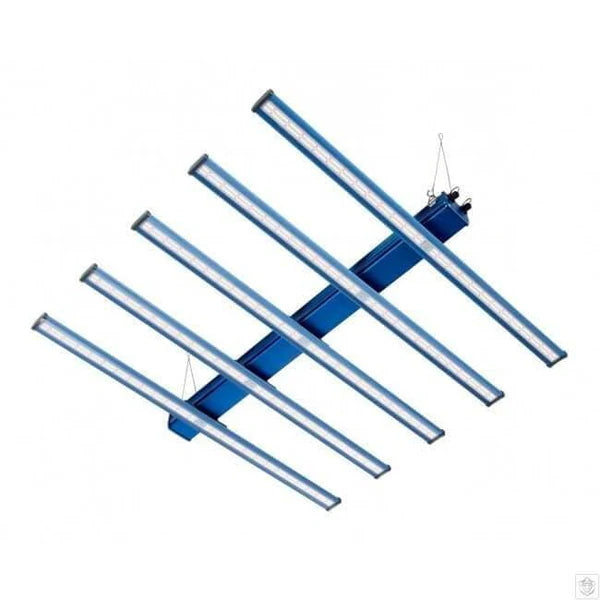
Maxibright Daylight 480W — Standard & PRO
from £263.95
The straight 600 W HPS swap — 1.2 × 1.2 m
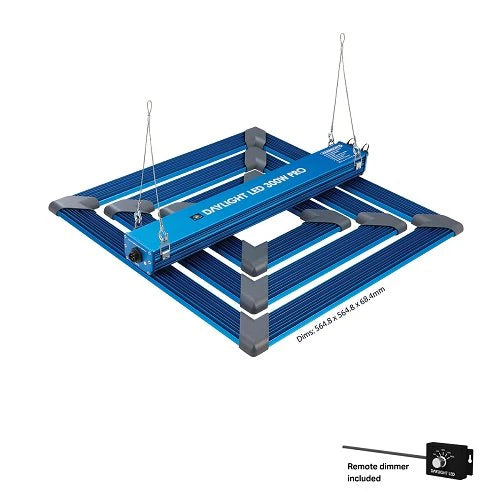
Maxibright Daylight 300W — Standard & PRO
from £250.49
95p a day at 12/12 — sized for a 1 m tent

Lumatek Zeus Pro 600w LED
from £474.49
Serious efficiency for a 1.5 m tent

Lumatek ATS Pro LED
from £222.95
The cheapest honest way into LED
Staying on HPS? Cut the bill anyway
Not everyone should switch, and there's plenty of money left on the table without doing so. A dimmable digital ballast lets you drop to 400 W or 250 W in veg — at the 250 W setting, counting the ballast, that's roughly £1.30 for an 18-hour day instead of £3.13 at full power, for a stage where the plants don't need full power anyway. A tired bulb is the other quiet thief: HPS output falls away over 9–12 months while the meter keeps charging you the same 660 W, so an old bulb is literally the worst efficiency you'll ever run. And a timer that actually holds its schedule is the cheapest insurance in the tent.

Omega Black 600w Dimmable Kit
from £49.95
Dim to 400 W or 250 W when veg allows

Omega Dual Spectrum Bulbs
£14.95
An old bulb burns full watts for less light
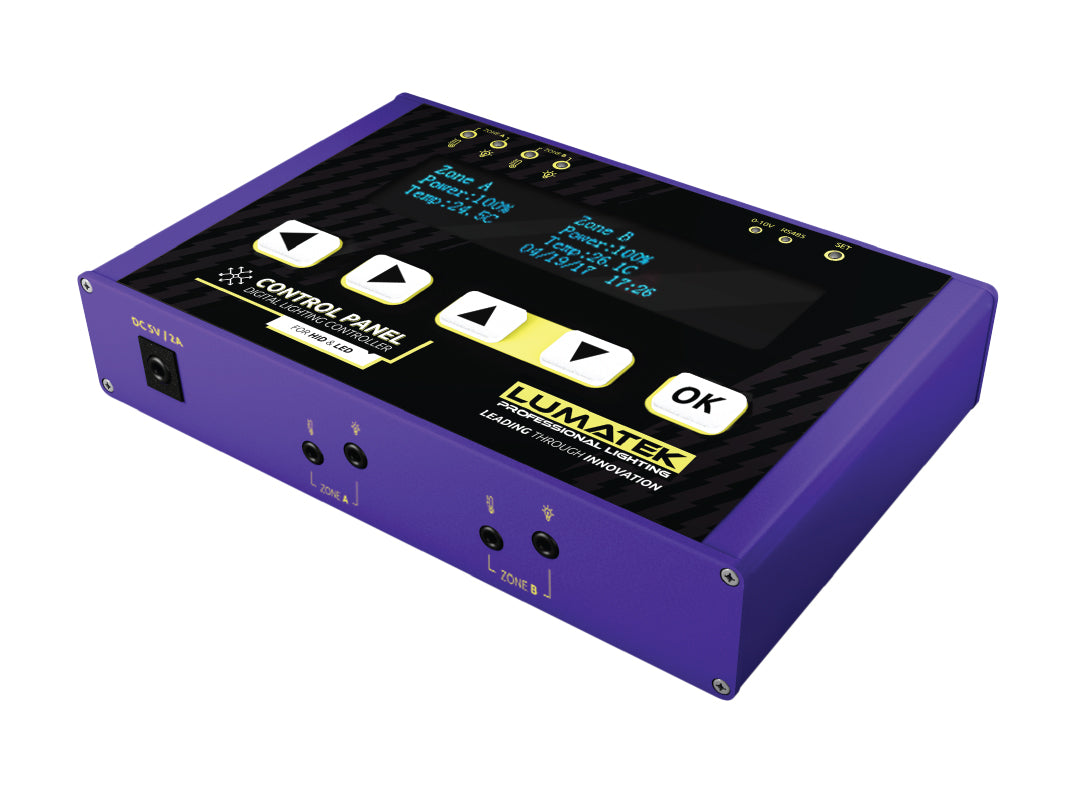
Lumatek Digital Panel PLUS 2.0 (HID + LED)
£329.49
Schedule, dim and sunrise/sunset in one box

24hr Digital Timer
£11.95
Every extra hour on is money out
Quick answers
Are LED grow lights actually cheaper to run than HPS?
Yes, for the same amount of light. A 600 W HPS kit draws about 660 W at the wall and makes roughly 1,100 µmol/s. A Maxibright Daylight 480W makes 1,104 µmol/s from 480 W — 27% less electricity for the same light. At the October to December 2026 price cap of 26.32p per kWh that's £1.52 a day instead of £2.08 at 12/12, or £553 a year instead of £761. The catch is the upfront price: the LED costs roughly £214 more, so it takes about a year of continuous running to pay for itself.
How much does it cost to run a 600w HPS for 12 hours a day?
About 17p an hour, £2.08 a day, £63 a month, or £761 a year at the October to December 2026 price cap rate of 26.32p per kWh. The maths: a 600 W kit pulls roughly 660 W including the ballast, so 0.66 kW × 12 hours = 7.92 kWh a day × 26.32p. Swap in your own unit rate from a recent bill for an exact figure — the cap varies by region and tariff.
How much electricity does a whole grow tent use?
The light is 80–90% of it. For a typical 1.2 × 1.2 m tent in flower: a 480 W LED at 12/12 is about £45 a month, an extractor fan of 60–110 W running 24/7 adds £11–21, and a clip fan a few pounds more — so roughly £60–70 a month all in, or £80–90 a month if you're still on a 600 W HPS. Anything else (pumps, a small humidifier) is usually pennies by comparison.
Does a "600 W" HPS really use 600 W?
No — that's the bulb rating, not the system. Once you include the ballast's losses the whole kit draws about 640–670 W from the socket, and your meter charges you for the lot. LED fixtures are rated the opposite way: a "480 W" LED means 480 W at the wall, driver included. It's worth knowing when you're comparing the two on paper, because HPS is already understating itself by about 10%.
Is it worth switching from HPS to LED in 2026?
It depends how much you run. If you grow most of the year, yes — the switch pays for itself in around 12 months and saves roughly £208 a year after that, plus you stop buying bulbs and put about 30% less heat in the tent. If you run one cycle a year, no — the payback is years out and a £49.95 HPS kit is the better buy. The tipping points that decide it for most people: your bulb is due anyway, or summer heat is already costing you yield.
What does µmol/J mean, and why should I care?
It's light out per unit of electricity in — the grow-light equivalent of miles per gallon. A 600 W HPS kit manages about 1.7 µmol/J; a Maxibright Daylight 480W standard is 2.3 µmol/J and the PRO version is 2.8 µmol/J. Higher means more light for the same money on the meter, so it's the single most useful number for comparing fixtures. Ignore any "equivalent wattage" claim on a box and look for µmol/J and total PPF instead.
More grow guides
- What size extractor fan and carbon filter do you need?
- How to set up a grow tent, step by step
- Feeding in coco: nutrients, EC & pH made simple
- Spider mites: the 14-day rescue plan
- How to keep your grow tent cool in summer
- Grow tent humidity: the right RH for every stage
- Nutrient burn: how to spot it, fix it and stop it coming back
- How to take cuttings: the complete cloning guide
Questions? Call the shop on 020 3488 0419 — free expert advice, 6 days a week. Free Express Delivery over £60, arriving in 1-2 working days.