


Nutrient Burn: How to Spot It, Fix It and Stop It Coming Back
Brown, crispy leaf tips are the most misread symptom in growing. Half the people who see them reach for more feed, because it looks like a deficiency — and that makes it worse. Nutrient burn is the opposite problem: too much mineral salt in the root zone, not too little. Here's how to tell burn apart from the things that mimic it, the flush-and-restart fix that stops it spreading, and the EC numbers that keep it from happening again.
What nutrient burn actually looks like
Real nutrient burn has a signature you can learn in about ten seconds. It starts at the very tip of the leaf, turns yellow then tan then brittle brown, and creeps inwards along the edges. It's symmetrical — the same on both halves of the leaf — and it shows up first on the biggest, fastest-growing leaves, because those transpire the most and pull the most salt up with the water.
Three other problems get blamed on nutrient burn constantly, and each one needs the opposite response. Check yours against these four before you change anything:
Burnt tissue never comes back
This is worth knowing before you panic. A tip that has gone brown and brittle is dead — no amount of correction will turn it green again. What you are doing is stopping the spread, and the only place you'll see the result is in the new growth. Judge whether the fix worked by looking at the leaves that appear over the next week, not the ones that are already damaged.
Why it happens (it's rarely just "too much feed")
Nutrient burn is a concentration problem. The plant can only take up so much mineral salt through its roots; everything above that sits in the medium, pulls water back out of the root hairs by osmosis, and gets carried to the leaf tips where it accumulates and scorches. Usually one of five things put it there:
1. Feeding a small plant an adult dose. Manufacturer charts assume a full-sized plant in a full-sized pot. A seedling in week two needs a fraction of it. 2. Additives stacked on a complete base feed. Every booster, PK, silica and CalMag you add raises the EC — three "small" additions can push a sensible 1.6 mix to 2.4. 3. No run-off. If you never water past the point of saturation, salts stay behind every feed and build up over weeks even at a perfectly reasonable strength. 4. Hard tap water. Much of the UK runs 0.3–0.5 EC straight out of the tap before you've added anything — if you mix your feed to the chart's number without subtracting that, you're over from the start. 5. Letting the medium dry right out. Water evaporates, salt doesn't, so the solution left around the roots gets steadily stronger.
The CalMag trap
CalMag is genuinely essential in coco and under LEDs — but it's also the single most over-added bottle in growing. Many base nutrients (and all hard tap water) already carry plenty of calcium. Adding a full dose on top of those raises EC without the plant needing any of it, and burns the tips of a plant that had no deficiency at all. If you're in coco, our coco feeding guide covers when CalMag is actually needed and how much.

Shogun CalMag
from £4.49
For real cal-mag spotting, not tip burn

Canna Cal-Mag Agent
from £12.49
Soft or RO water top-up
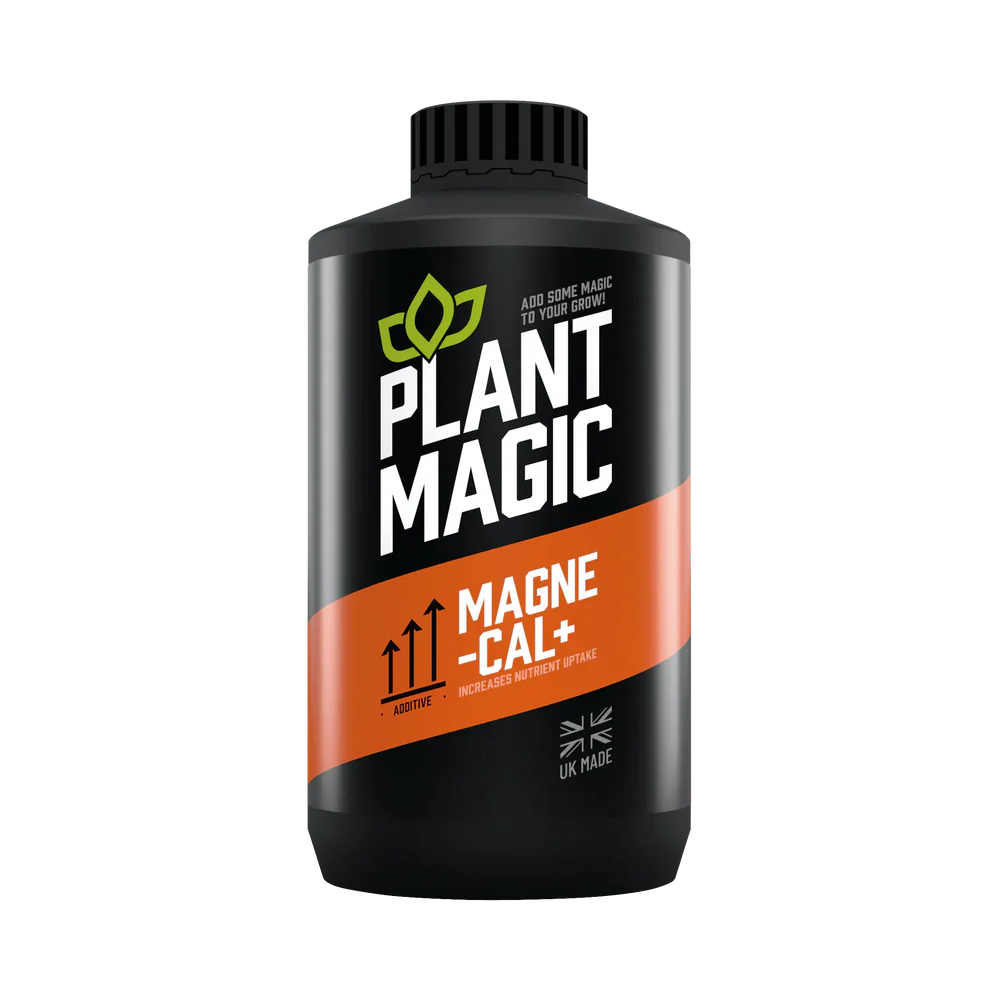
Plant Magic MAGNE Cal+
from £8.49
Magnesium-led, for LED grows
The fix: measure, flush, restart low
Once you've confirmed it's burn, the recovery is the same whatever caused it. Don't guess your way through this — the whole thing hinges on one number you can read in five seconds.
Step 1 — measure both ends. Check the EC of the feed going in, then catch the run-off coming out and check that too. If the run-off reads noticeably higher than the input, you have salt built up in the medium and that is your problem confirmed. Step 2 — flush. Run plain water, pH-corrected to 5.8–6.2 in coco or 6.0–6.5 in soil, through the pot at roughly three times its volume — so about 33 litres for an 11L pot. A flushing agent does it faster by breaking down the bound-up salts rather than just diluting them. Keep testing the run-off; you're done when it's close to what you're pouring in. Step 3 — restart at half strength. Go back in at about 50–60% of what you were feeding, and build up over the following two weeks only if the new growth stays clean. Step 4 — leave the damaged leaves alone, unless a leaf is more than about half dead. Burnt tips don't spread on their own, and a stressed plant needs every bit of working leaf it has left.

Canna Flush
from £9.95
Clears bound salts faster than water
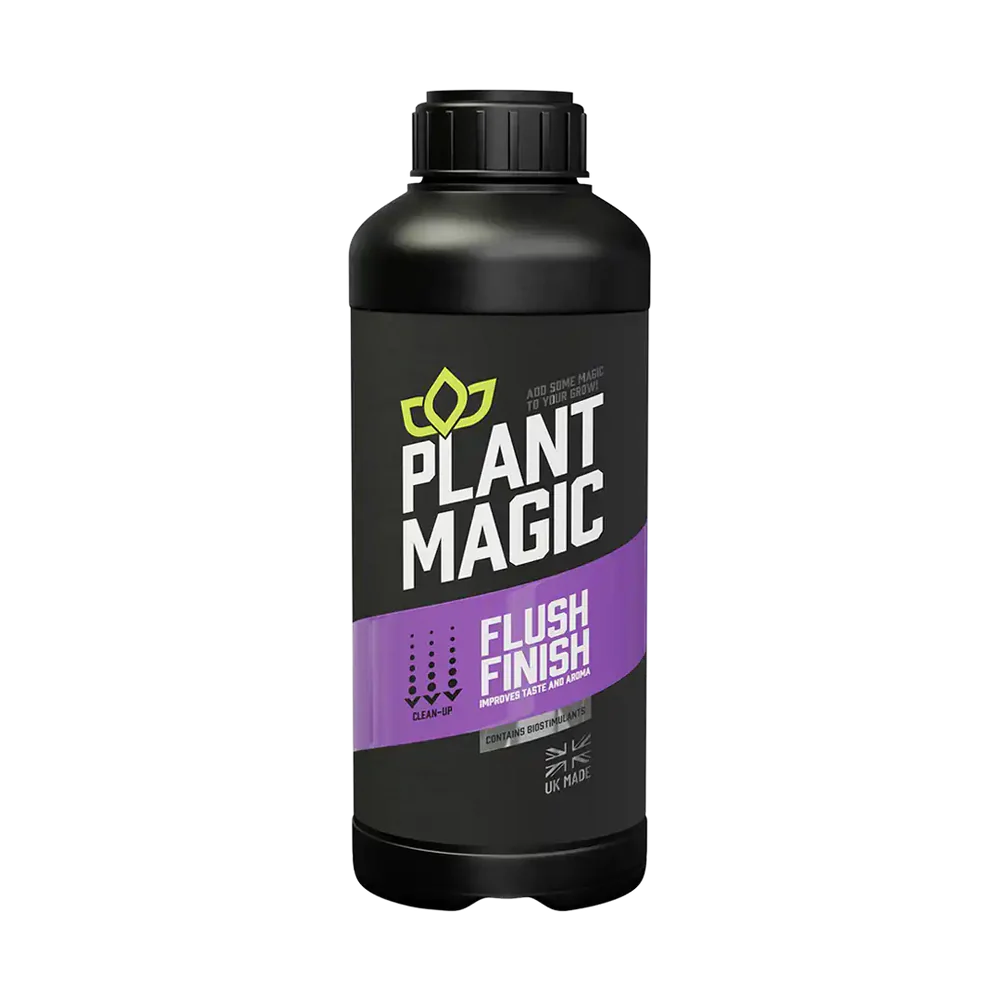
Plant Magic Flush Finish
from £10.49
Clears built-up salts from the root zone

SLF-100 Enzymes
from £29.95
Keeps the root zone clean between feeds
What EC should you actually be feeding?
EC (electrical conductivity, in mS/cm) measures how much dissolved mineral is in your water — it's the single number that tells you whether a mix is safe. Below are sensible targets for coco and hydro, measured on the solution going in. Running in soil? Take roughly 20–30% off every figure, because soil holds a nutrient reserve of its own.
| Stage | Target EC (mS/cm) | ppm (500 scale) | Notes |
|---|---|---|---|
| Clones & seedlings | 0.4 – 0.8 | 200 – 400 | No roots yet — barely feed at all |
| Early veg | 0.8 – 1.2 | 400 – 600 | Where most burn starts — go slow |
| Late veg | 1.2 – 1.6 | 600 – 800 | Plant is big enough to drink it |
| Early flower | 1.6 – 2.0 | 800 – 1000 | Stretch phase, demand climbing |
| Peak flower | 1.8 – 2.2 | 900 – 1100 | Ceiling — above this, tips go first |
| Final 1–2 weeks | 0.0 – 1.0 | 0 – 500 | Taper down to a plain-water finish |
Two things people get caught by. First, that's the total in the water, including your tap — if your supply reads 0.4 before you add anything, a 1.6 target means adding only 1.2 worth of feed. Second, ppm isn't one scale. The 500 scale (used above, and by most US-market pens) and the 700 scale give different numbers for the same water, which is exactly why serious growers ignore ppm and quote EC.

Hobby EC Pen
£14.49
The cheapest way to stop guessing

Bluelab EC Pen
£75.95
Accurate, holds calibration for years

Bluelab Nutrient Truncheon
£84.49
No calibration ever — the shop favourite

Bluelab Combo Meter
£228.95
EC, pH and temp on one wall unit
Stopping it coming back
Burn is one of the easiest problems to design out of a grow entirely. Four habits do almost all of it. Treat the feed chart as a ceiling, not a target — the manufacturer wrote it for ideal conditions and a full-size plant, so starting at 70% and working up costs you nothing. Water to 10–20% run-off every feed in coco, so salts leave with the water instead of stacking up. Mix everything, then measure — additives last, EC pen last of all, and adjust before it goes near a plant. And calibrate the pen, because a drifted meter is worse than no meter at all: cheap pens wander within weeks, and two small bottles of buffer solution put them right in a minute.
Check pH before you cut the feed
If your EC is genuinely in range and the tips are still going, pH is the usual culprit — at the wrong pH the plant can't absorb what's there, so growers keep adding more and burn the plant while it starves. Hold 5.8–6.2 in coco and hydro, 6.0–6.5 in soil. That single range prevents more problems than any bottle on the shelf. Setting up a new tent from scratch? Our grow tent setup guide covers getting this right from day one.

Hobby pH Pen
£19.49
Budget pH, calibrate it monthly

Bluelab pH Pen
£84.49
Replaceable probe, stays accurate

Growth Technology pH Down
from £4.49
A few drops per can — lasts ages

Growth Technology Buffer 7
from £2.95
Calibration solution — the £3 insurance
Quick answers
What does nutrient burn look like?
It starts at the very tip of the leaf and works inwards along the edges — yellow first, then tan, then dry and brittle brown. It's symmetrical on both halves of the leaf, and it appears on the biggest, fastest-growing leaves first because those pull the most water and salt. If the damage is in the middle of the blade, or only on the leaves directly under your light, it's something else.
Will nutrient burn kill my plant?
Caught early, almost never. A bit of tip burn on a few leaves costs you very little. Left to run, it climbs from the tips into the body of the leaf, kills off working leaf area, and the plant slows down and yields less — and in flower it can noticeably cut your final weight. It's a problem worth fixing the day you spot it, not an emergency.
How do I flush nutrient burn out?
Run plain water through the pot at about three times its volume — roughly 33 litres for an 11L pot — with the pH corrected to 5.8–6.2 in coco or 6.0–6.5 in soil. Test the run-off as you go; you're finished when its EC is close to the water going in. A dedicated flushing agent speeds this up by breaking down salts that are chemically bound in the medium rather than just diluting them. Then restart feeding at 50–60% strength.
Should I cut off the burnt leaves?
Mostly no. Burnt tips are dead tissue but they don't spread on their own, and the rest of that leaf is still photosynthesising for a plant that's already stressed. Remove a leaf only if it's more than about half dead or has gone crispy enough to crumble. Trimming brown tips off healthy leaves is purely cosmetic and just opens fresh wounds.
What EC should I be feeding?
In coco or hydro, roughly 0.4–0.8 for clones and seedlings, 0.8–1.2 in early veg, 1.2–1.6 in late veg, 1.6–2.0 in early flower and 1.8–2.2 at peak, then taper towards plain water for the last week or two. Knock 20–30% off all of those in soil. Remember the figure includes whatever your tap water already carries — if that reads 0.4, you've only got 1.2 of headroom to reach a 1.6 target.
Is it nutrient burn or a deficiency?
Look at where the damage sits. Burn is at the tips and edges, symmetrical, on your largest leaves. A cal-mag shortage shows as rusty brown spots scattered through the middle of the blade with the tips still green. pH lockout yellows the tissue between the veins while the veins themselves stay green. Light burn bleaches the top canopy directly under the lamp but stays soft rather than crisping. Only the first one means feed less — the other three get worse if you cut the feed.
More grow guides
- What size extractor fan and carbon filter do you need?
- How to set up a grow tent, step by step
- Feeding in coco: nutrients, EC & pH made simple
- Spider mites: the 14-day rescue plan
- How to keep your grow tent cool in summer
- LED vs HPS: which is actually cheaper to run?
- Grow tent humidity: the right RH for every stage
- How to take cuttings: the complete cloning guide
Questions? Call the shop on 020 3488 0419 — free expert advice, 6 days a week. Free Express Delivery over £60, arriving in 1-2 working days.